Tapster — Self-Hosted Cocktail Recipe Manager
Self-hosted cocktail recipe manager with barcode pantry tracking
About
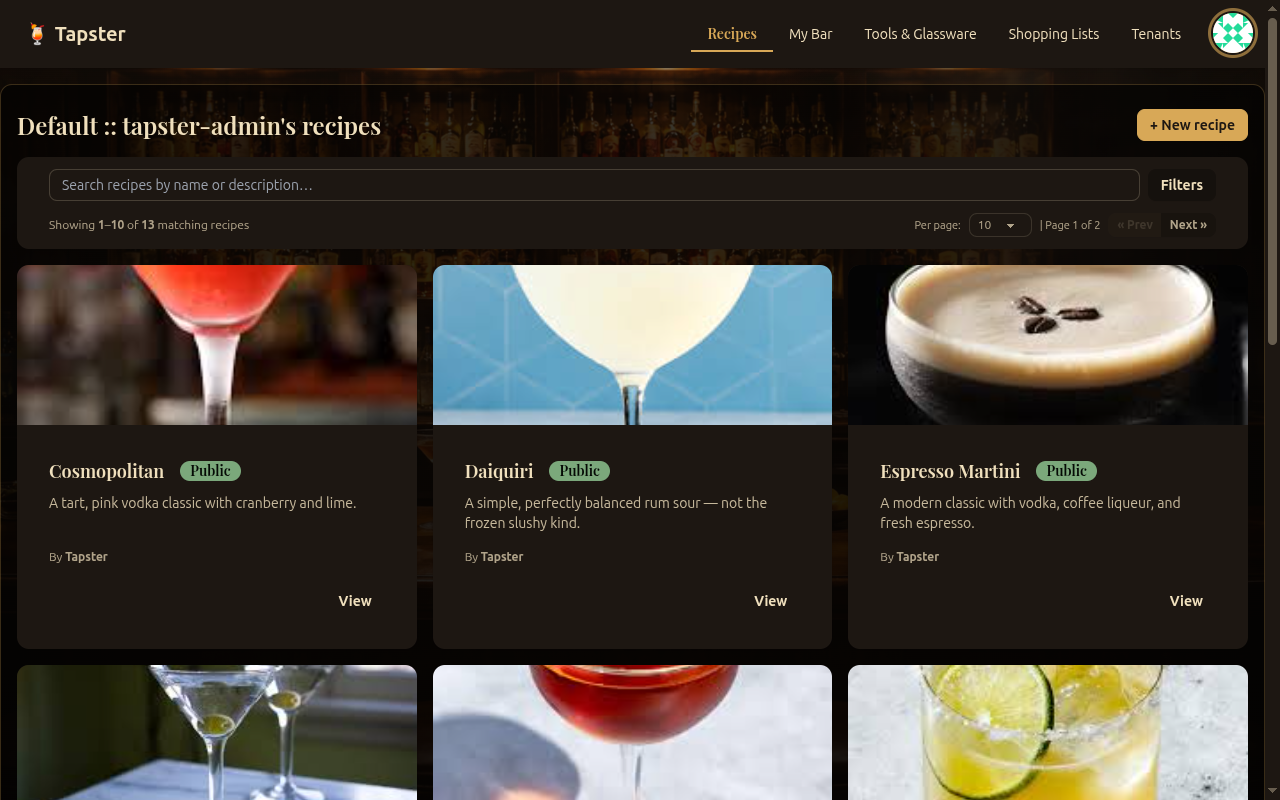
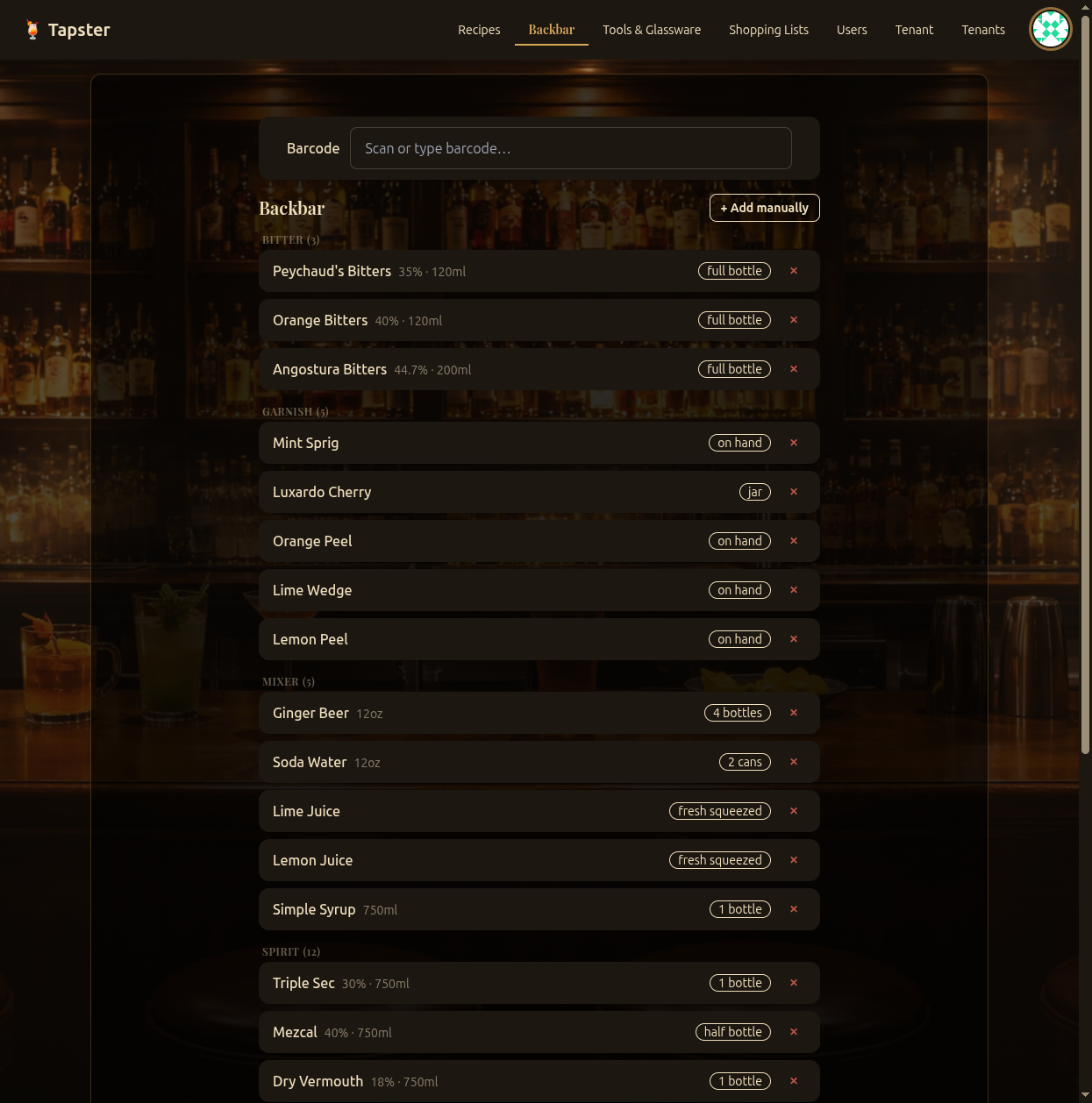
Tapster turns a home bar into a searchable, self-hosted database instead of a pile of bookmarked recipe blogs. Scan a bottle in with a barcode reader and it's looked up across Open Food Facts, UPCitemdb, and go-upc.com, then dropped straight into your pantry — the "Backbar." From there, every recipe in the catalog carries a feasibility badge: can-make, or some-in-bar, so you always know what's actually mixable right now, not just what's theoretically possible.
Multi-tenancy is built in from the schema up, so one deployment can host separate households or teams with fully isolated recipes, pantries, and shopping lists while still sharing a common seeded catalog. Point it at an OpenAI-compatible endpoint and "Moe" will suggest cocktails from what's actually on the shelf instead of a hypothetical one.
Features
- Feasibility-badged recipes: instantly see what you can make with what's in your Backbar
- Barcode-scan pantry inventory with a multi-provider UPC lookup fallback chain
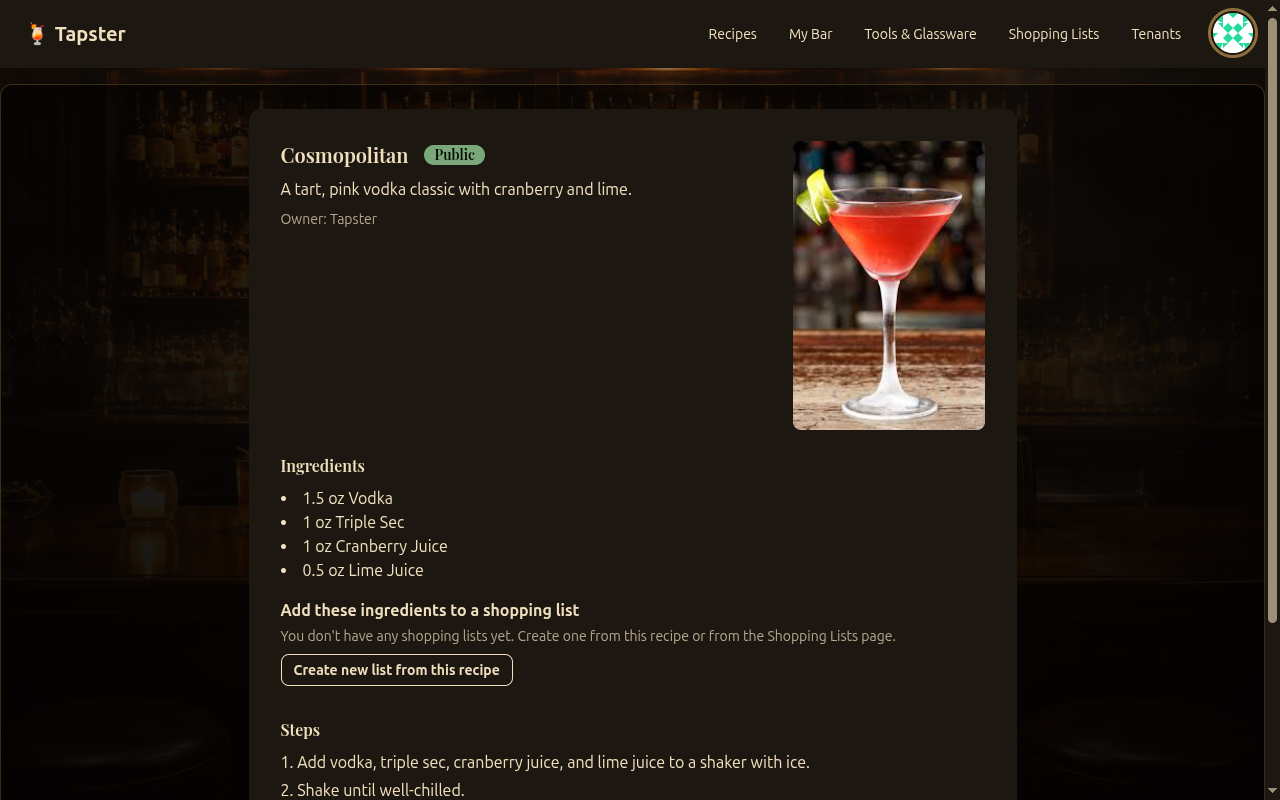
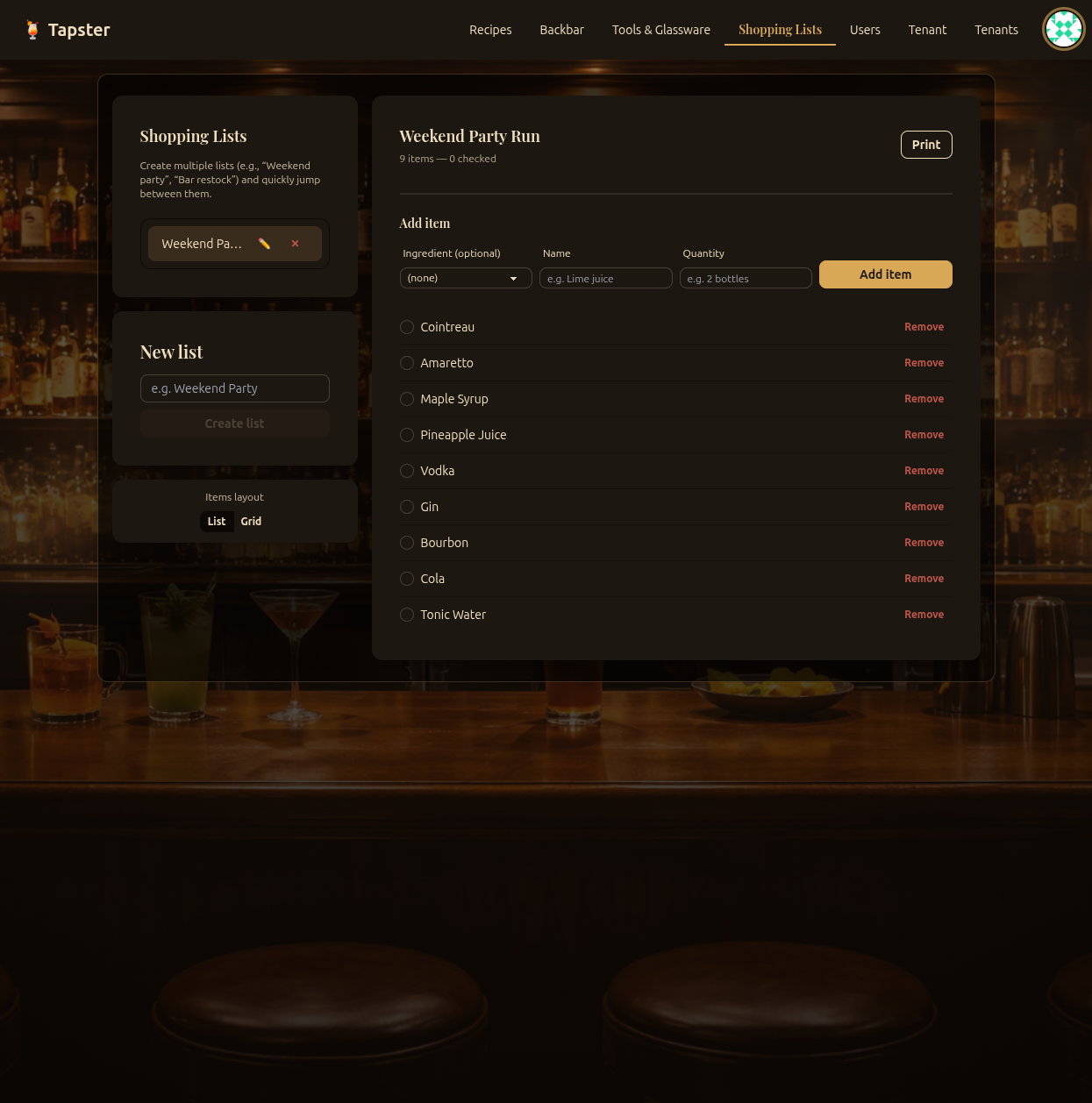
- Shopping lists with pantry-aware "have it" badges and bulk-add-missing from any recipe
- Schema-based multi-tenancy — isolated recipes, pantry, and users per tenant
- Optional "Moe" LLM mixologist — cocktail suggestions from your actual stock
- Per-tenant OIDC SSO and self-service password reset
Screenshots
Notes
Requires PostgreSQL — django-tenants uses schema-based isolation for multi-tenancy. Barcode coverage for spirits improves with an optional go-upc.com API key; Open Food Facts and UPCitemdb are used by default with no key required. SSO (per-tenant OIDC) and the Moe LLM assistant are both opt-in and configured per-tenant from Tenant Settings — no server restart needed.
Interested in Tapster? Get in touch →